 by
by Batting order determines match dynamics in T20 cricket. Teams choose to bat first or chase based on conditions and strengths.
Batting first allows teams to set targets without scoreboard pressure. They can pace innings freely and build totals strategically.
Chasing creates different mental pressure. Teams know exact targets and required run rates from ball one.
Mumbai Indians have posted twelve totals above 215 runs. Seven came while batting first. Five happened while chasing.
The split reveals interesting patterns. Batting first produced consistent success. Chasing showed mixed results.
Match outcomes differed significantly based on innings. First-innings batting led to a perfect win record. Second-innings batting brought losses.
This difference matters for understanding team strengths. MI’s bowling supports first-innings totals better than chasing efforts.
Venue conditions affect batting order decisions. Dew in evening matches favors chasing teams. Dry conditions help defending sides.
Opposition strength influences choices, too. Teams bat first against weak chasing sides. They chase when confident in their batting.
Run rates also vary by innings. Chasing teams often score faster, knowing the exact targets. Batting-first teams pace more carefully.
Statistical analysis reveals which approach works better for MI. Numbers show clear patterns in success rates.
Understanding innings-based differences helps explain why similar totals produce different results. Context matters as much as raw numbers.
Highest MI Scores In IPL History
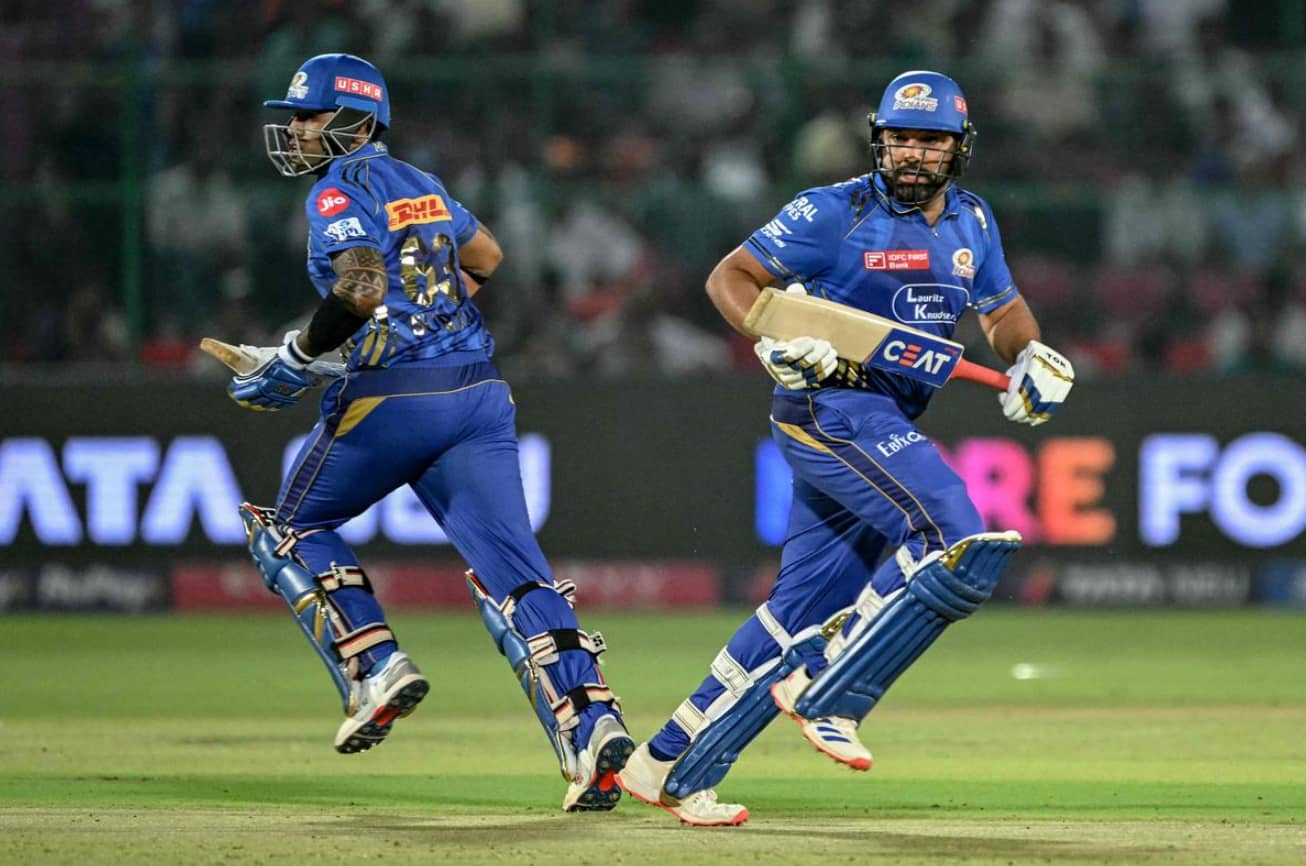
This breakdown examines batting first versus chasing performances. We compare totals, outcomes, and efficiency metrics across both approaches.
Batting Order Impact on Totals
First-innings batting removes scoreboard pressure completely. Batters build partnerships without knowing opposition’s capability.
They can play natural cricket. Defensive periods don’t hurt when target is unknown.
Second-innings batting adds constant pressure. Every dot ball increases required rate slightly.
Partnerships must maintain pace consistently. No room for extended quiet periods.
Bowling attacks also adjust strategies. First-innings bowlers attack more freely. Second-innings bowlers focus on containing runs.
Field placements differ significantly. Defending teams set defensive fields early when chasing. Batting-first teams face attacking fields longer.
MI’s biggest total came while chasing. The 247/9 against DC happened in second innings.
Their second-biggest (246/5) also came chasing. Both attempts failed despite massive scores.
This suggests chasing creates urgency that increases scoring. But urgency doesn’t guarantee wins.
Chasing Performance Analysis
Five MI totals above 215 came while chasing. Results split 2-3 in favor of losses.
What is the highest score in IPL of MI? The answer is 247/9, achieved while chasing DC.
This total used all 20 overs at 12.35 run rate. Fastest scoring rate in MI history.
Despite the record score, MI lost. DC successfully chased 248 runs.
The 246/5 against SRH also failed. Second-highest total still produced defeat.
Both losses came when MI crossed 245 runs. Massive totals proved insufficient.
The 223/6 against Kings XI at Wankhede also lost. Third chasing failure.
Only two chases succeeded. The 219/6 against CSK won in Delhi.
The 216/4 against Punjab Kings won in Mohali. This chase finished in 18.5 overs.
MI highest score chase in IPL includes both successful and failed attempts. The 247/9 failed. The 216/4 succeeded.
Success rate while chasing: 40%. Two wins from five attempts shows vulnerability.
Average chasing score: 230.4 runs. Despite high average, results disappointed.
Chasing totals ranged from 216 to 247. Significant 31-run spread across five matches.
Successful Chases Breakdown
Two chases produced victories from five attempts. Both came at moderate totals.
The 219/6 against CSK used all 20 overs. Run rate: 10.95 per over.
This was slowest among chasing efforts. Yet it won the match.
The 216/4 against Punjab took 18.5 overs. Early finish showed dominance.
Run rate: 11.46 per over. Faster than CSK chase despite lower total.
Only four wickets fell while scoring 216. Better wicket preservation than other chases.
Both successful chases stayed under 220 runs. Lower totals worked better.
Failed chases all exceeded 223 runs. Higher totals brought more losses.
This creates paradox. Bigger chasing scores failed more often.
Explanation: Opposition scored even bigger totals first. Chasing 250+ proves extremely difficult.
Failed Chases Analysis
Three chases failed despite big MI totals. All crossed 223 runs minimum.
The 247/9 loss showed 9 wickets down. Aggressive batting cost wickets.
The 246/5 loss had only 5 wickets down. Better preservation still failed.
The 223/6 loss fell in middle. Six wickets down with moderate total.
All three used complete 20 overs. No early finishes in failed chases.
Run rates in failed chases: 12.35, 12.30, 11.15. All above 11 per over.
Despite fast scoring, matches were lost. Speed alone doesn’t guarantee victory.
Opposition teams posted even bigger totals. Or chased MI’s totals successfully.
Failed chases averaged 238.7 runs. Much higher than successful chase average of 217.5.
This proves inverse relationship. Higher chasing totals correlate with more losses.
Batting First Performance Analysis
Seven times MI batted first scoring 215+. All seven matches were won.
Perfect 100% success rate. Every first-innings total got defended successfully.
The 235/9 against SRH in Abu Dhabi was defended. Highest batting-first total.
The 234/5 against DC at Wankhede also defended. Second-highest batting-first score.
The 228/5 against GT in Chandigarh won. Third-highest batting-first total.
Two 218 scores both defended: 218/7 vs Daredevils and 218/5 vs GT.
The 217/2 against RR defended successfully. Only two wickets lost.
The 215/7 against LSG was protected. Lowest but still defended.
Batting-first totals ranged from 215 to 235. Smaller 20-run spread than chasing.
Average batting-first score: 225.4 runs. Lower than chasing average of 230.4.
Yet success rate reached 100% versus 40% while chasing. Lower scores worked better.
Batting First Success Factors
All seven batting-first totals used full 20 overs. Complete innings utilized.
Run rates ranged from 10.75 to 11.75. More controlled than chasing rates.
No batting-first innings exceeded 12 run rate. More calculated aggression.
Wickets lost varied from 2 to 9. Different approaches all succeeded.
The 235/9 lost 9 wickets while batting first. Still won comfortably.
The 217/2 lost only 2 wickets. Also won easily.
Wicket preservation didn’t determine outcomes. Both extremes succeeded equally.
Setting targets allowed MI bowlers to plan defenses. Clear targets help bowling strategies.
Opposition teams faced pressure chasing 215+. Scoreboard pressure worked for MI.
Home and away split evenly. Four away wins, three home wins while batting first.
Venue didn’t matter for batting-first success. Strategy worked everywhere.
Batting First vs Chasing Totals
| Innings Type | Matches | Total Scores | Wins | Losses | Win % |
|---|---|---|---|---|---|
| Batting First | 7 | 235/9, 234/5, 228/5, 218/7, 218/5, 217/2, 215/7 | 7 | 0 | 100% |
| Chasing | 5 | 247/9, 246/5, 223/6, 219/6, 216/4 | 2 | 3 | 40% |
This table compares both innings types directly. Batting first shows perfect success record.
Chasing produced 60% failure rate despite higher average scores. Innings choice impacts results dramatically.
Seven batting-first matches all won. Five chasing matches produced three losses.
Overs Used vs Total Scored
| Innings Type | Avg Overs | Avg Score | Avg Run Rate | Range |
|---|---|---|---|---|
| Batting First | 20.0 | 225.4 | 11.27 | 215-235 |
| Chasing | 19.8 | 230.4 | 11.64 | 216-247 |
Batting first always used full 20 overs. Complete utilization of available time.
Chasing averaged 19.8 overs due to one 18.5-over finish. Slightly faster completion.
Average chasing score exceeded batting first by 5 runs. Higher totals while chasing.
Chasing run rate averaged 0.37 higher per over. Faster scoring when chasing.
Despite higher scores and faster rates, chasing failed more often. Speed doesn’t equal success.
Win Percentage Comparison
| Category | Batting First | Chasing | Difference |
|---|---|---|---|
| Matches | 7 | 5 | +2 |
| Wins | 7 | 2 | +5 |
| Losses | 0 | 3 | -3 |
| Win % | 100% | 40% | +60% |
| Avg Score | 225.4 | 230.4 | -5.0 |
Win percentage difference reaches 60 points. Massive gap between approaches.
Batting first never lost. Chasing lost three times from five attempts.
Lower batting-first average still produced better results. Total size doesn’t determine outcomes.
Five extra wins came from batting first despite scoring less on average.
Run Rate by Innings
| Innings | Fastest RR | Slowest RR | Average RR | Std Deviation |
|---|---|---|---|---|
| Batting First | 11.75 | 10.75 | 11.27 | 0.34 |
| Chasing | 12.35 | 10.95 | 11.64 | 0.58 |
Highest MI Scores In IPL History include fastest rate (12.35) while chasing. Batting first maxed at 11.75.
Chasing showed higher variation in rates. Standard deviation of 0.58 versus 0.34.
Batting first maintained more consistent rates. Less variation across matches.
Slowest chasing rate (10.95) exceeded slowest batting-first rate (10.75) marginally.
Yet the 10.95 chase (219/6) won. The faster chases above 12.00 both lost.
Innings Position Impact on Results
First-innings totals defended 100% successfully. Complete dominance when batting first.
Second-innings totals succeeded 40% only. Majority of chases failed.
This 60-point gap reveals clear strategy preference. MI should bat first when possible.
Bowling strength supports first-innings totals better. Defense works better than chasing.
Even massive chasing totals like 247 and 246 failed. Opposition chased or posted bigger.
Meanwhile moderate batting-first totals like 215 defended successfully. Lower sufficed.
Statistical Patterns Across Innings
Batting-first scores clustered between 215-235. Tight 20-run range.
Chasing scores spread across 216-247. Much wider 31-run range.
Tighter clustering suggests better planning when batting first. More controlled approach.
Wider chasing range shows varied match situations. Different targets demanded different responses.
All batting-first innings maintained run rates between 10.75-11.75. Controlled aggression.
Chasing rates varied from 10.95 to 12.35. Greater extremes in scoring speed.
Wickets Lost Comparison
Batting first saw wickets range from 2 to 9 down. Both extremes won.
The 235/9 lost 9 wickets batting first. Won despite heavy losses.
The 217/2 lost just 2 wickets. Also won comfortably.
Chasing saw wickets from 4 to 9 down. Similar range as batting first.
The 247/9 lost 9 wickets chasing. Lost despite massive total.
The 216/4 lost 4 wickets chasing. Won with better preservation.
No clear wicket-loss pattern determines results. Other factors matter more.
Year-Wise Innings Distribution
2024 produced three big scores. Two while chasing (247/9, 246/5), one batting first (234/5).
Both chases lost. Single batting-first innings won. Pattern held in 2024.
2025 saw three batting-first totals. All three won: 228/5, 217/2, 215/7.
No chasing attempts in 2025 within this dataset. Only defensive strategy used.
2023 had one batting-first (218/5) and one chase (216/4). Both won.
Mixed year with 100% success rate. Both strategies worked that season.
2021 featured one batting-first (235/9) and one chase (219/6). Both won.
Another mixed year with a perfect record. Balanced approach succeeded.
Venue Impact on Innings Choice
Wankhede saw two batting-first totals and one chase. Batting first won both times.
The chase (223/6) failed at home. Home conditions didn’t help chasing.
Delhi witnessed one batting-first (218/7) and two chases (247/9, 219/6).
Batting first won. Chases split 1-1. Mixed results at Delhi.
Away venues showed four batting-first wins. All succeeded without exception.
Chasing away showed a 1-2 record. Mostly failed on opposition grounds.
Opposition Response Analysis
Teams chasing MI’s batting-first totals all failed. None crossed 215+ targets.
MI’s bowling defended every first-innings total successfully. Perfect defensive record.
Teams batting first when MI chased posted huge totals. Some exceeded 245 runs.
MI’s bowling while chasing couldn’t restrict opponents. Defensive failures are common.
This explains innings-based result differences. Bowling performs better defending.
Chasing creates defensive pressure MI’s bowling can’t handle. Strategic weakness exposed.
Strategic Implications
Statistics clearly favor batting first. 100% success versus 40% proves this.
MI should choose to bat first when winning the toss. Better odds of victory.
Even 215 runs are defended successfully when batting first. No need for 240+.
Chasing requires 220+ minimum, with even that showing poor success. High-risk strategy.
Lower batting-first scores work better than higher chasing totals. Context beats numbers.
Conclusion
Highest MI Scores In IPL History reveal clear innings-based patterns. Batting first produced seven wins from seven attempts.
Chasing showed only a 40% success rate with two wins from five attempts. Massive 60-point difference.
The average batting-first score of 225.4 runs proved sufficient for a perfect record. Every total was defended successfully.
The average chasing score of 230.4 runs failed to produce similar results. Higher totals didn’t guarantee wins.
Run rates averaged 11.27 batting first versus 11.64 while chasing. Faster chasing didn’t help the results.
These innings-based statistics prove that batting first works significantly better for MI’s team composition and bowling strength.
Also Check:


