by
by England has announced its provisional 15-member squad for the ICC Men’s T20 World Cup 2026.
The tournament runs from February 7 to March 8, 2026, across India and Sri Lanka.
T20 format requires specific role coverage across three match phases: powerplay, middle overs, and death overs.
England’s squad provides skill distribution for each phase with primary and backup options when tactical adjustments are needed.
The squad includes four players designated for powerplay batting, six players capable of middle-overs spin bowling, and three specialists for death-over pace bowling.
This ensures England covers all match phases without role gaps in the playing XI.
Flexible role allocation allows players to operate in multiple phases based on match situations.
Seven squad members can bat in the middle overs while also providing bowling options when required.
Subcontinent conditions demand strong middle-overs spin control, where most T20 matches are decided.
England’s squad prioritizes this phase with four players who can bowl overs seven through fifteen effectively.
England Squad for T20 World Cup 2026
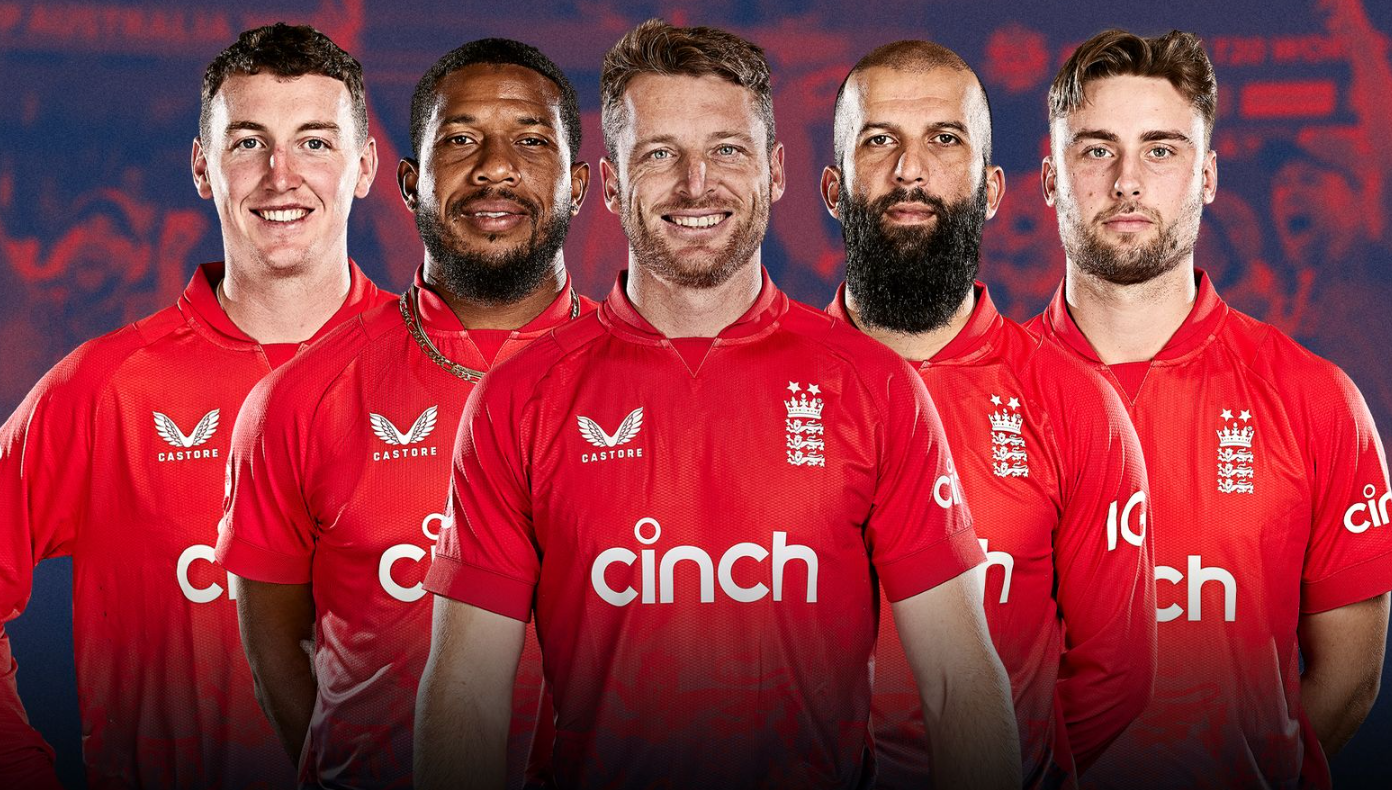
England’s T20 World Cup 2026 Squad Announcement
Harry Brook receives the T20 captaincy based on his role as a powerplay and middle-overs batter. The selection panel has chosen a captain who operates during cricket’s most tactically complex phases rather than specialized roles like death-overs finishing.
England’s selection prioritizes phase-specific skills over format-neutral abilities. Players who execute powerplay batting, middle-overs spin bowling, and death-overs pace variations receive preference regardless of their performance in other cricket formats.
Jofra Archer returns to provide express pace during the powerplay and death phases. His workload will be managed across four overs split between early and late match phases rather than continuous middle-overs bowling.
Mark Wood and Brydon Carse miss selection due to role overlap with existing death-overs pace options. Jamie Smith’s exclusion reflects England’s preference for wicketkeepers who can finish innings during overs sixteen through twenty rather than contribute only in middle phases.
England Squad for ICC Men’s T20 World Cup 2026
| Category | Players |
|---|---|
| Batters | Harry Brook (C), Ben Duckett |
| Wicketkeeper-Batters | Jos Buttler, Tom Banton, Phil Salt |
| Batting All-Rounders | Jacob Bethell, Will Jacks |
| Bowling All-Rounders | Rehan Ahmed, Sam Curran, Liam Dawson, Jamie Overton |
| Bowlers | Jofra Archer, Adil Rashid, Josh Tongue, Luke Wood |
Highlight Players from the Squad
- Harry Brook
Harry Brook operates as a middle-order batter covering overs seven through fifteen when spin bowlers dominate. His role requires strike rotation against spin and acceleration when pace bowlers return for death overs. Brook’s powerplay batting provides backup when England needs aggressive starts if the primary openers fail.
- Jofra Archer
Jofra Archer fills a dual-phase bowling role across the powerplay and death overs. His workload splits between overs one through six for early wickets and overs eighteen through twenty for yorker execution. Archer’s pace variations work effectively in both phases on slower Indian and Sri Lankan pitches, where speed differential creates false shots.
- Jos Buttler
Jos Buttler covers the death-overs finishing role from overs sixteen through twenty. His wicketkeeping responsibilities span all match phases, while batting contributions concentrate on the final five overs. Buttler’s ability to score against both pace and spin during death overs makes him critical when England requires fifteen-plus runs per over.
- Adil Rashid
Adil Rashid controls middle-overs spin bowling from overs seven through fifteen. His role involves restricting scoring rates and taking wickets during cricket’s lowest run-rate phase. Rashid’s googly and top-spinner variations prevent batters from rotating strike freely when field restrictions end after the powerplay.
- Sam Curran
Sam Curran operates primarily in death-overs bowling, covering overs sixteen through twenty with left-arm pace variations. His batting role provides lower-order hitting during the final five overs when England needs partnerships beyond specialist batters. Curran’s slower-ball variations suit death-overs bowling on pitches offering limited pace assistance.
England’s T20 World Cup 2026 Fixtures
Group C Match Schedule
| Match | Opponent | Date | Venue |
|---|---|---|---|
| 1st Match | Nepal | 8 February 2026 | Wankhede Stadium, Mumbai |
| 2nd Match | West Indies | 11 February 2026 | Wankhede Stadium, Mumbai |
| 3rd Match | Bangladesh | 14 February 2026 | Eden Gardens, Kolkata |
| 4th Match | Italy | 16 February 2026 | Eden Gardens, Kolkata |
West Indies and Bangladesh possess strong middle-overs spin bowlers requiring England’s powerplay batting to establish scoring foundations. Matches against these opponents test England’s ability to score during overs seven through fifteen when spin controls proceedings.
Nepal and Italy lack death-overs bowling quality, allowing England to test finishing combinations without risking match outcomes. Early powerplay performance determines whether England can afford middle-overs consolidation or requires aggressive batting throughout.
Sri Lanka Tour Before the World Cup
The Sri Lanka tour provides match conditions for testing phase-specific role assignments. Three T20Is allow England to experiment with powerplay batting orders and middle-overs bowling rotations before finalizing World Cup combinations.
England can evaluate death-overs bowling partnerships between Archer, Curran, and Luke Wood during tour matches. These phase-specific trials determine which bowler combinations work best for overs sixteen through twenty execution.
Middle-overs spin bowling receives particular focus during Sri Lankan conditions, replicating tournament venues. England must finalize whether two specialist spinners or one spinner with part-time options controls overs seven through fifteen most effectively.
Powerplay batting experiments test whether an aggressive six-hitting approach or strike-rotation strategy works better on slower pitches. The tour determines England’s powerplay philosophy for the World Cu,p where early wickets often dictate middle-overs strategy.
Sri Lanka Tour Schedule
| Format | Matches | Dates | Venues |
|---|---|---|---|
| ODI | 3 | 22, 24, 27 January 2026 | Colombo |
| T20I | 3 | 30 January, 1, 3 February 2026 | Kandy |
Conclusion:
England’s squad provides clear role coverage across all three T20 match phases.
Powerplay batting includes four designated players, middle-overs spin bowling has six options, and death-overs pace attack features three specialists.
This distribution ensures no phase lacks primary and backup skill coverage.
Phase balance favors middle-overs control, where six players can bowl spin during cricket’s tactically critical period.
England’s squad structure recognizes that overs seven through fifteen determine match outcomes more frequently than powerplay or death phases in subcontinent conditions.
Death-bowling strength relies on pace variations rather than express speed alone.
Sam Curran, Jofra Archer, and Luke Wood provide left-arm and right-arm options with slower-ball expertise suited for pitches offering minimal natural pace assistance during the final overs.
Tournament readiness depends on role clarity achieved through the Sri Lanka tour testing.
England must finalize phase-specific partnerships, establish bowling rotations for middle overs, and confirm finishing order before the World Cup begins.
The squad structure supports multiple tactical approaches across different match phases without forcing rigid role assignments.
Also Check: