by
by The Indian Premier League (IPL) has revolutionized cricket since its 2008 launch, blending sporting excellence with entertainment spectacle to create a global phenomenon worth billions.
Behind this transformation stands an elite group of ipl team owners whose vision, resources, and business acumen have redefined what’s possible in cricket.
These owners represent a fascinating cross-section of India’s corporate titans, international investors, and entertainment moguls who have invested not just their wealth but their strategic thinking into creating world-class sports franchises.
From industrial conglomerates to media empires, from Bollywood stars to private equity firms, IPL ownership reflects the diverse forces driving modern cricket’s commercial evolution.
IPL Team Owners List 2025
In this comprehensive guide, we’ll explore the personalities, companies, and strategies behind each IPL franchise.
You’ll discover how their management approaches influence team performance, how their business backgrounds shape their cricket operations, and how their financial resources translate into competitive advantages.
We’ll examine the ownership journeys from initial acquisition to current status, highlighting the transformative decisions that have built billion-dollar cricket brands.
Whether you’re interested in the business of sport or simply curious about who pulls the strings behind your favorite IPL team, this insider’s look at IPL ownership reveals the fascinating intersection of sport, entertainment, and high-stakes business that makes the league truly unique.
IPL Ownership Landscape: The Complete Picture
Before diving into individual team ownership profiles, this comprehensive table provides a snapshot of the current ownership structure across all ten IPL franchises:
| Team | Principal Owners | Corporate Entity | Entry Year | Acquisition Cost | Current Value Est. | Owner Net Worth |
|---|---|---|---|---|---|---|
| Mumbai Indians | Mukesh & Nita Ambani | Reliance Industries | 2008 | $111.9 million | $1.3+ billion | $92.8 billion |
| Chennai Super Kings | N. Srinivasan | India Cements | 2008 | $91 million | $1.1+ billion | $10 billion |
| Royal Challengers Bangalore | Diageo | United Spirits Ltd | 2008 | $111.6 million | $1.0+ billion | $11.95 billion |
| Kolkata Knight Riders | Shah Rukh Khan, Juhi Chawla, Jay Mehta | Red Chillies/Mehta Group | 2008 | $75.1 million | $1.1+ billion | Combined: $4.3 billion |
| Delhi Capitals | GMR Group, JSW Group | 50-50 Partnership | 2008 | $84 million | $810+ million | Combined: $10.9 billion |
| Rajasthan Royals | Manoj Badale, Lachlan Murdoch, RedBird Capital | Royals Sports Group | 2008 | $67 million | $650+ million | Combined: $2.3+ billion |
| Punjab Kings | Mohit Burman, Ness Wadia, Preity Zinta, Karan Paul | Consortium | 2008 | $76 million | $700+ million | Combined: $17+ billion |
| Sunrisers Hyderabad | Kalanithi Maran | Sun TV Network | 2012 | $85.1 million | $750+ million | $5.3 billion |
| Gujarat Titans | CVC Capital Partners | CVC Capital Partners | 2021 | $685 million | $850+ million | AUM: €182 billion |
| Lucknow Super Giants | Sanjiv Goenka | RPSG Group | 2021 | $932 million | $950+ million | $4.5 billion |
Now, let’s explore the fascinating stories behind each of these ownership groups and how they’ve shaped IPL’s competitive landscape.
Mumbai Indians: The Reliance Powerhouse
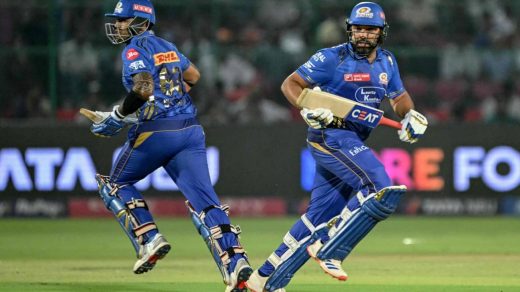
Mumbai Indians (MI) stands as IPL’s most decorated franchise with five championships, a direct reflection of the strategic vision and unparalleled resources of owners Mukesh and Nita Ambani of Reliance Industries.
Ownership Profile: The Ambani Dynasty
- Key Figures: Mukesh Ambani (Chairman, Reliance Industries) and Nita Ambani
- Business Empire: Reliance Industries – India’s largest private sector company
- Core Industries: Petrochemicals, refining, telecommunications (Jio), retail, digital services
- Acquisition Year: 2008, as one of the original franchises
- Investment: $111.9 million (₹446 crore)
- Mukesh Ambani’s Current Net Worth: $92.8 billion
- Championships: 5 (2013, 2015, 2017, 2019, 2020)
Mukesh Ambani, consistently ranked among the world’s wealthiest individuals, has brought Reliance’s corporate excellence to cricket management. His wife, Nita Ambani, serves as the hands-on team mentor and is frequently seen at matches, deeply involved in strategic decisions and team culture development.
The Mumbai Indians Method: Building a Dynasty
The Ambanis have revolutionized cricket franchise management through several groundbreaking approaches:
- Integrated Performance Ecosystem: MI pioneered the creation of a comprehensive performance environment encompassing cutting-edge training facilities, recovery protocols, nutrition programs, and mental conditioning resources that match or exceed international cricket standards.
- Advanced Analytics Integration: They were the first to establish a dedicated cricket analytics department, employing data scientists to provide granular insights for talent identification, match strategy, and performance optimization. This data-driven approach gives them a consistent edge in player acquisition and tactical planning.
- Long-term Talent Investment: Rather than chasing established stars, MI established cricket’s most sophisticated talent identification system, discovering players like Jasprit Bumrah and Hardik Pandya before they became international stars. Their scouting network extends from urban centers to remote Indian villages.
- Corporate Management Structure: The franchise operates with Reliance’s corporate efficiency, with professional executives handling commercial operations while cricket specialists manage sporting aspects, avoiding the interference common in other teams.
- Brand Development Excellence: Leveraging Reliance’s marketing expertise, MI has built cricket’s most valuable franchise brand through strategic partnerships, digital innovation, and community engagement programs that create lifelong fan loyalty.
The Ambanis’ approach transcends traditional sports ownership, applying sophisticated corporate methodologies to cricket management. Their willingness to invest in infrastructure rather than just star players has created sustainable competitive advantages that explain their unprecedented championship success.
Chennai Super Kings: Cricket Administration Expertise
Chennai Super Kings (CSK) represents the perfect synergy between corporate stability and cricket knowledge. Under N. Srinivasan and India Cements, CSK has established a model of consistent excellence with four IPL championships.
Ownership Profile: Cricket’s Administrator-Businessman
- Principal Owner: N. Srinivasan
- Corporate Entity: India Cements Limited
- Business Background: Cement manufacturing, power generation, shipping
- Cricket Administration: Former BCCI President and ICC Chairman
- Initial Investment (2008): $91 million
- Corporate Net Worth: $10 billion
- Championships: 4 (2010, 2011, 2018, 2021)
N. Srinivasan represents a rare combination – deep cricket administration expertise paired with successful business leadership. As former head of both the BCCI and ICC, he brings unmatched understanding of cricket governance, player management, and sporting politics to franchise ownership.
CSK’s Winning Formula: The “Chennai Way”
Under Srinivasan’s leadership, CSK has developed a distinctive approach to franchise cricket:
- Cricket Intelligence Over Financial Muscle: While lacking the financial resources of teams like Mumbai Indians, CSK compensates with superior cricket intelligence – identifying players whose technical attributes match their strategic needs rather than pursuing headline-generating stars.
- Valuing Experience and Stability: CSK famously trusts proven performers, often extending the careers of veterans other teams consider past their prime. Their “Dad’s Army” approach has been repeatedly vindicated through championship success.
- Clear Role Definition: Players joining CSK receive crystal-clear communication about their role in the team’s strategy, creating certainty that translates to consistent performance.
- Leadership Continuity: The franchise has maintained remarkable stability with MS Dhoni serving as long-term captain, creating institutional knowledge and strategic consistency.
- Cultivating Regional Pride: The ownership has leveraged Tamil cultural identity to build the passionate “Yellow Army” fan base, creating emotional connections that transcend typical sports fandom.
The team faced its greatest challenge when suspended for two years (2016-2017) due to its owner’s alleged involvement in betting-related controversies. However, CSK’s triumphant return to win the 2018 championship immediately upon reinstatement demonstrated the organizational strength Srinivasan had built.
CSK’s success demonstrates how cricket-specific knowledge can compensate for financial limitations, establishing a management philosophy now widely studied and emulated in franchise cricket globally.
Kolkata Knight Riders: Entertainment Meets Strategy
Kolkata Knight Riders (KKR) represents the perfect blend of showbiz glamour and strategic business thinking. Led by Bollywood superstar Shah Rukh Khan, along with actress Juhi Chawla and industrialist Jay Mehta, KKR has evolved from entertainment spectacle to championship-winning cricket operation.
Ownership Profile: Bollywood’s King and Business Partners
- Key Owners: Shah Rukh Khan, Juhi Chawla, and Jay Mehta
- Business Entities: Red Chillies Entertainment and Mehta Group
- Initial Investment (2008): $75.1 million
- Combined Net Worth: Approximately $4.3 billion
- Shah Rukh Khan: $780 million
- Jay Mehta (Mehta Group): $3.5 billion
- Juhi Chawla: $6 million
- Championships: 3 (2012, 2014, 2024)
Shah Rukh Khan brings unmatched star power and marketing genius to KKR. His business partner, Juhi Chawl, and her husband, Jay Mehta (who runs the industrial conglomerate Mehta Group) provide complementary business expertise that balances Khan’s celebrity influence.
KKR’s Evolution: From Glamour to Champions
KKR’s ownership journey represents one of IPL’s most remarkable transformations:
- Initial Entertainment Focus: In early seasons, KKR emphasized spectacle over cricket strategy, with cheerleaders, elaborate pre-game shows, and celebrity appearances taking precedence over team building.
- Strategic Pivot: After three disappointing seasons, ownership made a fundamental shift, hiring cricket professionals like Venky Mysore as CEO and empowering them to implement data-driven cricket operations.
- Leadership Investment: Appointing Gautam Gambhir as captain proved transformative, leading to their first two titles (2012, 2014). His return in a leadership role delivered their third championship in 2024.
- Analytics Innovation: KKR pioneered data analytics in IPL through partnerships with MIT Sports Lab and later through their proprietary systems, revolutionizing how talent is evaluated.
- Global Brand Expansion: The ownership has leveraged IPL success to build a global T20 cricket brand, acquiring teams in the Caribbean Premier League, Major League Cricket (USA), and UAE’s ILT20.
Khan’s emotional presence at matches – his jubilant celebrations, visible disappointments, and interactions with players – has created an emotional narrative around KKR that transcends cricket.
His marketing genius has helped build one of IPL’s strongest brands, while the operational excellence provided by professional management has delivered championship results.
KKR represents the ideal case study of celebrity ownership evolving beyond personal brand extension to build a professional sporting infrastructure capable of sustainable success.
Royal Challengers Bangalore: Corporate Evolution
Royal Challengers Bangalore (RCB) presents a fascinating case study in corporate ownership transition. Originally purchased by flamboyant businessman Vijay Mallya, the franchise is now controlled by global spirits giant Diageo through United Spirits Limited, demonstrating how ownership changes influence team culture and performance.
Ownership Timeline: From Mallya to Multinational
- Original Owner (2008-2016): Vijay Mallya and UB Group
- Current Owner (2016-Present): Diageo (through United Spirits Limited)
- Initial Acquisition Cost: $111.6 million
- Ownership Transition: 2016, when Diageo acquired a controlling stake in United Spirits
- Corporate Net Worth: $11.95 billion
- Best Results: Runners-up (2009, 2011, 2016)
RCB’s ownership story reflects dramatic corporate change. Vijay Mallya, the “King of Good Times” known for his flamboyant personality and Kingfisher beer empire, brought his high-flying lifestyle to cricket ownership. When his business empire collapsed amid financial scandal, control transferred to Diageo, bringing corporate professionalism but losing the charismatic individual owner’s presence.
RCB’s Distinctive Approach: Building a Global Brand
Despite ownership changes, several elements have remained consistent in RCB’s strategy:
- Star-Centric Team Building: The franchise consistently pursues cricket’s biggest names, having fielded batting icons like Virat Kohli, AB de Villiers, and Chris Gayle simultaneously, creating enormous fan appeal despite championship drought.
- Global Brand Focus: The franchise has prioritized building an internationally recognized brand through aggressive marketing, distinctive team identity, and a focus on entertainment value beyond match results.
- Commercial Innovation: Under corporate ownership, RCB has pioneered numerous revenue streams beyond traditional sponsorship, including branded merchandise, experiential marketing, and content production.
- Fan Community Development: Despite never winning a championship, RCB maintains one of cricket’s most passionate fan bases through digital engagement strategies, community initiatives, and embracing “play bold” as team philosophy.
- Bangalore Identity: The franchise effectively leverages its home in India’s technology hub, creating partnerships with tech companies and appealing to the city’s young, cosmopolitan demographic.
RCB demonstrates that corporate ownership can build significant commercial value even without on-field championships. Their business success despite sporting limitations proves that in modern cricket, brand building can sometimes be as financially rewarding as winning trophies.
Rising Forces: The New Ownership Model
The IPL’s newest franchises – Gujarat Titans and Lucknow Super Giants – represent the league’s evolution toward professionally managed, institutional ownership models that bring global sports management expertise to cricket.
Gujarat Titans: Private Equity Precision
- Owner: CVC Capital Partners
- Business Type: Global private equity firm
- Sports Portfolio: Formula One, La Liga, Volleyball World, Six Nations Rugby
- Acquisition (2021): $685 million
- Assets Under Management: €182 billion
- Championship: 1 (2022 – debut season)
CVC Capital Partners represents the new frontier in cricket ownership – professional sports investors with global expertise across multiple sports properties. Unlike traditional team owners, CVC brings sophisticated portfolio management approaches to sports franchise operation.
Their immediate success – winning the championship in their debut season – demonstrated how professional sports management expertise can create instant competitive advantages. Key elements of their approach include:
- Professional Leadership Structure: Clear separation between ownership and cricket operations, with experienced sports executives making key decisions
- Global Best Practices: Implementing performance management systems developed across their international sports portfolio
- Strategic Roster Construction: Building team balance rather than pursuing individual stars
- Long-term Value Creation: Focus on sustainable business fundamentals rather than short-term results
Lucknow Super Giants: Industrial Group Returns
- Owner: Sanjiv Goenka and RPSG Group
- Business Empire: Power, carbon black, IT, retail, consumer goods
- Previous IPL Experience: Owned Rising Pune Supergiant (2016-2017)
- Acquisition Cost (2021): $932 million (highest in IPL history)
- Owner Net Worth: $4.5 billion
- Initial Results: Playoff qualification in debut season
Sanjiv Goenka’s RPSG Group represents a different ownership model – the diversified Indian conglomerate bringing corporate management discipline to cricket operations. Unlike many initial IPL owners who treated teams as passion projects, Goenka approaches cricket ownership with clear business objectives.
His approach includes:
- Professional Management: Hiring experienced cricket administrators rather than direct owner involvement
- Data-Driven Decision Making: Employing analytics for talent identification and performance management
- Brand Integration: Aligning the team brand with the broader corporate identity
- Regional Connection: Building strong community ties in cricket-passionate Uttar Pradesh
The record-breaking acquisition price paid by RPSG Group demonstrates how IPL franchises have evolved from speculative investments to premium business assets with established valuation models.
The Business Impact of Ownership Models
After examining each ownership group individually, clear patterns emerge showing how different ownership approaches translate to business and sporting outcomes:
Ownership Types and Performance Correlation
- Individual Business Leaders (Ambanis, Srinivasan): Teams owned by individual business leaders with direct involvement show the highest championship success rate, likely due to decisive decision-making and personal accountability.
- Corporate Entities (USL/Diageo): Corporate-owned teams demonstrate strong commercial performance but sometimes lack the passionate leadership that drives sporting success.
- Entertainment-Business Partnerships (KKR): These hybrid models combine celebrity appeal with business discipline, creating strong brands that can achieve both commercial and sporting success when properly balanced.
- Private Equity/Institutional Investors (Gujarat Titans): Professional sports investors bring sophisticated management practices but may lack the emotional connection that drives long-term fan loyalty.
- Consortiums (Punjab Kings): Teams with multiple co-owners often struggle with strategic consistency due to competing visions, potentially explaining their limited championship success.
Financial Evolution of IPL Ownership
The economics of IPL ownership have transformed dramatically since the league’s inception:
- Initial Investment (2008): Original franchises cost between $67 and 112 million
- Mid-Period Expansion (2012): Sunrisers Hyderabad’s acquisition cost $85 million
- Recent Expansion (2021): Gujarat Titans cost $685 million, Lucknow Super Giants $932 million
This exponential valuation growth represents an approximately 10x return for original owners over 15 years, making IPL franchises among the world’s best-performing sports investments. Current franchise valuations range from $650 million to $1.3+ billion, with the Mumbai Indians at the top end.
Revenue Streams Developed by Innovative Owners
The most successful owners have pioneered diverse revenue streams beyond the central IPL distribution:
- Corporate Partnerships: Beyond jersey sponsorships to integrated brand collaborations
- Merchandise and Licensing: Creating year-round product ecosystems
- Content Production: Developing streaming content beyond match broadcasts
- Youth Academies: Talent development with both sporting and commercial benefits
- Global Team Networks: Leveraging IPL brands into other cricket leagues worldwide
Also Check:
- Afghanistan National Cricket Team Vs India National Cricket Team Timeline
- Delhi Capitals Vs Mumbai Indians Timeline
Conclusion: The Future of IPL Ownership
The landscape of IPL team owners provides fascinating insights into how different management philosophies influence sporting organizations.
From industrial conglomerates to entertainment moguls, from cricket administrators to global investors, these diverse approaches collectively elevated IPL into cricket’s commercial pinnacle.
Several key ownership trends will shape IPL’s future:
- Institutional Investment Growth: Following CVC’s successful entry, more professional sports investors and private equity firms will likely pursue IPL opportunities.
- Valuation Maturation: With franchises now valued at $650 million-$1.3 billion, future ownership changes will involve sophisticated valuation models rather than speculative bidding.
- Multi-Sport Portfolio Development: Existing owners increasingly view their IPL franchises as centerpieces of broader sports portfolios, with expansion into other leagues and sports.
- Women’s Cricket Integration: Most current IPL owners have acquired Women’s Premier League teams, creating synergies between men’s and women’s cricket properties.
- Global Cricket Ecosystem: Leading ownership groups now operate teams across multiple international T20 leagues, creating year-round operations and global brand presence.
The extraordinary success of IPL demonstrates how the right ownership, combining financial resources, strategic vision, and cricket understanding, can transform a traditional sport into a global entertainment product. The next chapter of IPL ownership will likely see even greater sophistication as cricket fully embraces its potential as a premium global sport.
For fans, understanding team ownership provides crucial context for appreciating the strategic decisions that shape competition. From auction strategies to coaching appointments, many key decisions directly reflect the priorities, philosophies, and resources of these fascinating ownership groups who continue writing cricket’s most compelling business story.